The Supply Chain Behind a Pumpkin Spice Latte
A Pumpkin Spice Latte may be a seasonal favorite, but bringing it to customers requires a global supply chain working behind the scenes. Each ingredient follows its own journey before coming together in a finished beverage.
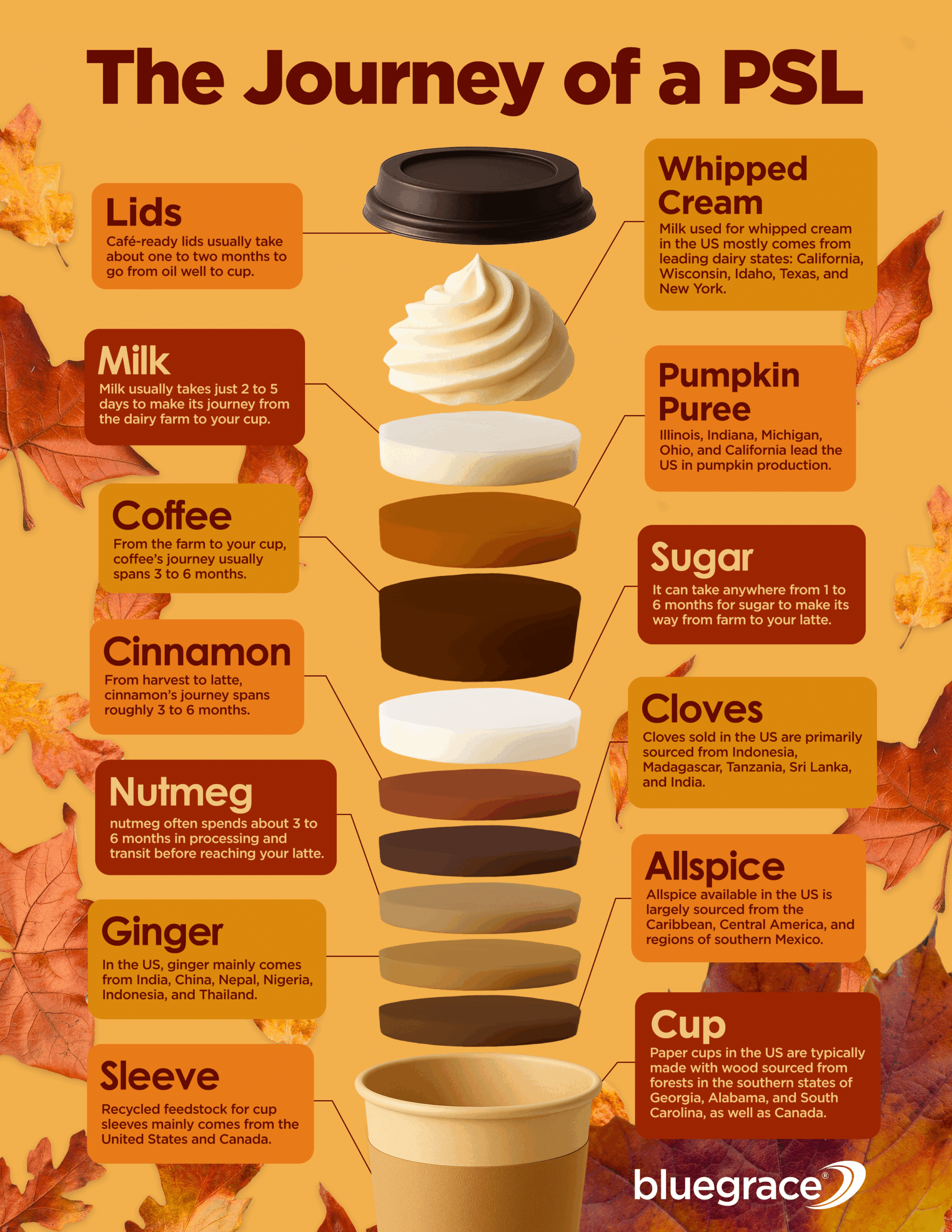
Coffee beans travel from growing regions around the world to roasting facilities before reaching distribution networks. Dairy ingredients move through temperature-controlled transportation systems, while spices such as cinnamon, ginger, nutmeg, and cloves require careful sourcing and coordination across international suppliers.
Even the packaging has its own supply chain. Paper cups, lids, and sleeves rely on materials sourced, processed, and transported before they reach beverage manufacturers and retailers.
From farms and manufacturers to warehouses and final delivery locations, every step requires planning, transportation coordination, and supply chain visibility. The journey of a Pumpkin Spice Latte demonstrates how logistics connects global suppliers with everyday consumer products.
The Logistics Behind Seasonal Beverages
Seasonal beverages depend on precise timing. Companies must forecast demand, source ingredients, coordinate transportation, and position inventory before customers begin purchasing.
A delay anywhere in the supply chain can impact availability. Weather events, transportation disruptions, supplier challenges, and changing consumer demand can all affect whether seasonal products reach customers on schedule.
For food and beverage companies, supply chain visibility is critical. Understanding shipment status, managing carrier performance, and responding quickly to disruptions helps businesses maintain reliable operations during peak seasons.
BlueGrace helps companies improve transportation visibility through BlueShip®, providing centralized shipment tracking, carrier insights, and proactive exception management. By combining technology with logistics expertise, businesses can better manage complex supply chains and keep products moving from suppliers to consumers.
 Login
Login