There is growing conviction among US companies that inventory destocking is working, thinning stockpiles of goods built up in 2022 — but just not fast enough. “The peak of inventory is behind us,” Harmit Singh, chief financial and growth officer of apparel maker Levi Strauss & Co., told Wall Street analysts during a July 6 quarterly earnings call. The clothing maker expects to end the year with inventories below 2022 levels. On a broad level, however, destocking is not happening rapidly. Early second-quarter earnings reports paint a picture of gradual inventory reduction and ongoing adjustment, with inventories still high in many sectors.
“We are seeing that retailer inventory rebalancing has largely normalized following the significant adjustments affecting nearly all consumer discretionary categories over the past year,” Julien Mininberg, CEO of consumer goods manufacturer Helen of Troy, said during an earnings call Monday. “Our retail partners are now increasingly matching their orders to consumer demand,” Mininberg said. Footwear maker Nike referred to a “normalizing supply chain” in which it is carefully managing US inventory — by which it means limiting the availability of inventory.
“Our inventory levels are ahead of our plan and ahead of the competition,” Nike CFO Matt Friend said during a June 29 earnings call. “The large majority of our strategic partners have also done a beautiful job moving through the inventory.”
But wholesalers struggling with flagging consumer demand are having trouble reducing inventories.
US retail, manufacturing and wholesale: sales to inventory (BTS)
Ratio of US retail end-of-month inventories to monthly sales. A ratio of 2.5 indicates retail stores have enough merchandise on hand to cover 2.5 months of sales.

Merchant wholesale inventories in May were still 4.1% higher than in May 2022, although they were down 2.6% from their November 2022 peak of $930 million according to non-seasonally adjusted US Census Bureau data released on Monday.
Wholesale retailers reduced inventories 1.4% from April, the unadjusted Census Bureau data showed, but no more than expected when accounting for seasonality in the late spring.
A more cautious consumer is hobbling attempts to fully destock and begin restocking and shipping. Inventories remain high enough to be a drag on US imports and surface freight demand, extending a contraction in freight volumes that began last October, according to several sources.
US shipper inventory sentiment index (BlueGrace Logistics)
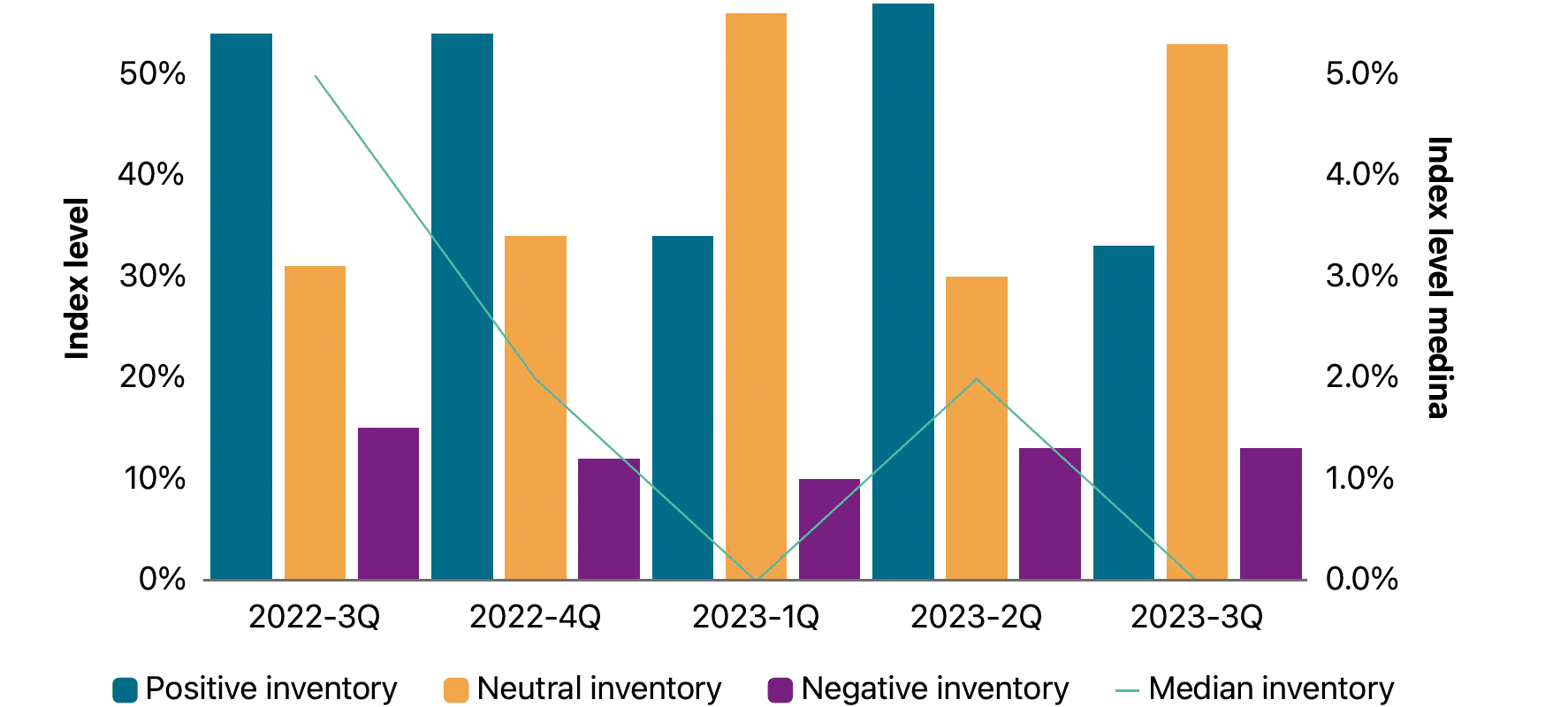
Research firm Armada Corporate Intelligence estimates that 61.5% of US businesses are still overstocked, with only 23.7% holding “effectively balanced” inventories and 11.3% understocked.
Positive shipper sentiment about inventories decreased 25 percentage points, from 57% in the second quarter index to 33%, in BlueGrace Logistics’s third-quarter Logistics Confidence Index. “Neutral” sentiment rose from 30% to 53%, “indicating a growing uncertainty,” BlueGrace said.
READ THE FULL ARTICLE HERE
 Login
Login