
Delivering Excellence:
Innovations and Strategies in Food and Beverage Logistics
When food, beverage and alcohol shippers face unpredictable demand surges, complex state-by-state permitting requirements, and rising cargo theft rates, the difference between thriving and falling behind comes down to strategy. This whitepaper examines the three core challenges facing food and beverage shippers today and the operational approaches leading companies use to stay ahead.
Industry: Food & Beverage | Alcohol Logistics
42.1%
Potential reduction in outbound freight cost
68%
of cargo thefts spike in Q4, led by food & beverage
50%
increase in food & bev cargo theft year-over-year
Introduction
When food, beverage and alcohol shippers discuss freight, they face a volatile landscape characterized by unpredictable shifts in demand, stringent regulations for alcohol transportation, and complex insurance and liability concerns. The recent surge in demand, along with unforeseen market trends, demands swift adaptation to avoid being overwhelmed by the changing logistics environment.
As demand fluctuates unpredictably, companies must stay agile to ensure the sustainability of their operations. Navigating state-specific regulations for permits and licenses adds complexity, requiring a thorough understanding and adherence to ensure legal compliance. Furthermore, managing insurance and liability risks associated with transporting alcohol is crucial, necessitating comprehensive risk management strategies.
Thriving in this challenging environment requires industry stakeholders to innovate, cultivate strategic partnerships, and adopt a proactive approach to risk management. Embracing these principles enables companies to position themselves for success in the demanding and dynamic beverage and alcohol freight market.
Thriving in this challenging environment requires industry stakeholders to innovate, cultivate strategic partnerships, and adopt a proactive approach to risk management.
Controlling Demand
The industry grapples with one of its primary challenges: the unpredictability of demand increases. When beer companies expand into the lucrative seltzer market, as an example, the demand landscape becomes even more uncertain. Forecasts often fail to anticipate such shifts, especially during warmer months when consumption peaks. Major holidays, summer seasons, and significant sporting events further contribute to the volatility in demand.
When these sudden shifts occur, freight often sits idle on docks, awaiting loading. Navigating the regulatory landscape of different states adds layers of complexity for shippers and brokers. Brokers, in particular, struggle to convert volumes efficiently due to unique motor carrier counts, resulting in delays and inefficiencies in the supply chain.

Case Study
Amidst a competitor’s supply chain disruption causing market shortages, a leading beverage company faced a huge and almost immediate surge in demand. To meet it, the company swiftly increased production. However, their traditional carriers struggled with the additional capacity and timeframe.
Leveraging partnerships with a third-party logistics provider, the beverage company secured additional transportation, including refrigerated trucks as needed. The 3PL helped them put into place optimization strategies like dynamic routing and load consolidation that ensured efficient operations. Real-time visibility tools tracked shipments to preempt disruptions and all MADB and OTIF requirements were met.
By adapting to this sudden capacity challenge, the company not only fulfilled orders seamlessly but also gained a sustained competitive edge over a 72-hour timeframe. Demonstrating resilience and adaptability solidified its position as a reliable partner for OTIF retailers and a preferred choice for consumers, driving growth amidst industry disruptions. The optimization strategies continued throughout 2023 during many of the demanding beverage-specific holidays with success.
Despite disruptions, an opportunity for differentiation exists. Understanding subcontractors and unique motor carriers allows shippers to consolidate groups effectively, optimizing their carrier base for efficiency. Small to mid-size carriers offer flexibility and understand expectations, facilitating smoother operations during demand shifts.
Closures and labor/resource shortages compound shippers’ challenges, requiring a proactive approach to optimize carrier bases and mitigate risks. Implementing drop trailer solutions at breweries provides the flexibility needed to navigate uncertainties effectively. Tailored solutions address unique motor carrier concerns, fostering confidence and trust among industry players.
Despite no capacity restraints in the market, maintaining key performance indicators (KPIs) and on-time in-full (OTIF) metrics, required by larger retailers, remains challenging, especially when deviating from established networks.
Many major retailers use MADB and OTIF metrics to evaluate whether your company is effectively delivering goods that meet these specified standards:
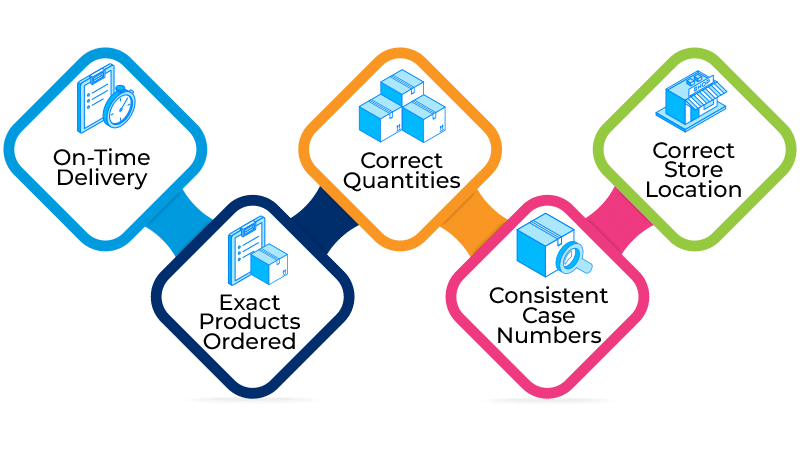
In such a dynamic environment, flexibility and adaptability are crucial. Expert logistics providers, such as 3PLs, pride themselves on building bespoke solutions for beverage clients’ needs. By managing costs and resources effectively, they can ensure agility to handle demand fluctuations without compromising service quality.
A 3PL has access to more capacity that has been pre-screened and utilizes up-to-date scorecards specific to the food and beverage industry. With this capacity availability they are able to assist businesses in multiple ways.
A good example of how a 3PL can help control carrier demand issues is with a drop trailer solution. This type of solution offers the flexibility to build trailer pools, enhancing scheduling capabilities and enabling swift pivots outside established networks to address disruptions promptly.
In such a dynamic environment, flexibility and adaptability are crucial.
A second example is to utilize AI and software tools for load optimization. By inputting past shipment data, 3PLs are able to build out extensive, optimized load plans for businesses. The plans are only accessible when there is a large carrier base to select from, something that a business might not have access to. These load plans can be updated for holidays, industry changes and other issues so they are the most effective options for each shipper.
Case Study
A major iced tea manufacturer faced operational disruptions when they maximized production and outsourced their lemonade production to a co-packer. This decision, while intended to increase efficiency, threw off their network, impacting volumes and distribution. However, they were able to swiftly respond by employing load optimization strategies. By analyzing shipping routes, cargo capacities, and delivery schedules, the company optimized their loads, mitigating the disruptions caused by outsourcing lemonade production.
This proactive approach enabled them to realign their distribution network, ensuring timely deliveries and maintaining customer satisfaction despite the initial setbacks.
Regulations
Shippers in the food, beverage and alcohol freight industry can face legal challenges, with navigating the complex landscape of alcohol permitting emerging as a significant hurdle. Unlike other commodities, alcohol is subject to stringent regulations that vary from state to state, presenting compliance hurdles for shippers.
The disparate treatment across different states poses one of the most daunting aspects of alcohol permitting. Each state imposes its own regulations and permit requirements, leading to confusion and logistical headaches for shippers. For instance, in states like Kentucky, known for its bourbon industry, shippers must obtain costly annual permits per driver. In contrast, states like New Jersey may have more transactional permitting processes, allowing for temporary permits based on shipment duration or fleet size.
Alcohol Control State Categories
State control of beer, wine, and spirits
State control of wine and spirits
Other alcoholic beverage control states
State-by-state regulations vary significantly, requiring careful permit management for each shipping lane.
To effectively navigate this regulatory maze, shippers must deeply understand each state’s requirements and ensure their supply chain partners can adhere to them. This includes carriers, 3PLs, warehouses, and distributors, all playing crucial roles in alcohol transportation and distribution. However, not all carriers are equipped or willing to transport alcohol, citing risk concerns or religious beliefs, while distributors holding alcohol distribution licenses wield significant influence and revenue power in their operating states.
For brand owners, alcohol permitting challenges extend beyond compliance to include distribution model complexities. With each distribution layer adding markups, the supply chain becomes more complex, impacting profit margins. To address these challenges, shippers must collaborate with 3PLs and carriers well-versed in alcohol permitting intricacies. Selecting partners with necessary permits and comprehensive knowledge of state-specific regulations is crucial. By aligning with knowledgeable partners, shippers can navigate alcohol permitting complexities more efficiently.
Alcohol permitting is a formidable challenge for shippers in the beverage and alcohol freight industry. By understanding regulations, partnering with knowledgeable supply chain entities, and ensuring compliance at every distribution stage, shippers can mitigate risk and streamline operations in this highly regulated sector.
By understanding regulations, partnering with knowledgeable supply chain entities, and ensuring compliance at every distribution stage, shippers can mitigate risk and streamline operations in this highly regulated sector.
Insurance and Liability Considerations
In addition to facing regulatory and operational challenges, the food, beverage and alcohol freight industry grapples with significant headaches concerning insurance and liability for shippers. With the rising cost of goods and consumable beverages and increase in theft, the necessity for robust risk management strategies and sufficient insurance coverage becomes crucial.
A primary concern for shippers is ensuring adequate coverage in case of shipment loss or damage. Despite their efforts, many shippers encounter situations where the invoice value of goods doesn’t match the actual value at risk. This dissonance is particularly acute in the alcohol sector, where products pass through three-tier distribution channels, obscuring the wholesale value from the invoice value. Shippers must understand this distinction clearly to ensure proper protection.
2025 Freight Theft Statistics
47%
jump in food and beverage cargo theft incidents in 2025, totaling 708 reported thefts — the largest commodity increase of any category – CargoNet
60%
surge in estimated total cargo theft losses in 2025, rising to $725 million as organized crime groups shifted focus to high-value freight – CargoNet / Verisk
$274K
average value per stolen load in 2025, a 36% increase from $202,000 in 2024, reflecting criminals’ shift toward higher-value shipments – CargoNet / Verisk
Adding to the issue is the reluctance of large motor carriers to provide insurance coverage. Due to the high risk associated with transporting valuable cargo, including the risk of theft, many carriers prefer self-insurance. This leaves shippers vulnerable, assuming they have coverage that may not be in place. Moreover, standard insurance policies may not cover alcohol or other specific items, leaving shippers susceptible to significant financial losses in the event of a claim.
To tackle these challenges, innovative solutions like smart locks, sensors, GPS trackers, and seals are utilized to reduce theft risk. These tools act as unique identifiers for high-value shipments, alerting authorities to be vigilant in case of theft. However, even with such measures, shippers must stay vigilant and proactive in managing their insurance and liability risks.
Insurance and liability considerations present significant challenges for shippers in the beverage and alcohol freight industry. By comprehending insurance coverage nuances, navigating three-tier distribution channels, and implementing proactive risk management strategies, shippers can better safeguard their assets and mitigate the financial impact of unforeseen events.
Even with measures such as smart locks, sensors, GPS trackers, and seals, shippers must stay vigilant and proactive in managing their insurance and liability risks.
Solutions for Food and Beverage Shippers
Controlling Demand
Controlling demand for food and beverage shippers is essential for smooth supply chains:
Here are the top three solutions:
Data Analytics and Forecasting
Utilize advanced data analytics and forecasting techniques to predict demand patterns accurately. This involves analyzing historical sales data, market trends, and other relevant factors to generate precise forecasts. Leverage consolidation software to optimize your current freight process and access multiple modes as needed.
Collaborative Planning with Suppliers and Retailers
Foster closer collaboration with suppliers and retailers to share information and coordinate efforts in demand planning. This helps in aligning inventory levels effectively and reducing the impact of demand variability.
Flexible Production and Distribution Networks
Invest in flexible production and distribution networks that can quickly adapt to changes in demand. This may involve utilizing multi-sourcing strategies, outsourcing certain production processes, or employing agile manufacturing techniques.
Regulations
When it comes to regulations for food and beverage shippers, ensuring compliance is crucial to maintain safety standards and avoid penalties.
Here are the top three solutions:
Regulatory Compliance Management Systems
Implement robust regulatory compliance management systems that track and manage adherence to food safety regulations and industry standards.
Utilize software solutions designed for compliance tracking, audit management, and documentation to ensure all regulatory requirements are met.
Training and Education Programs
Develop comprehensive training and education programs for employees involved in food handling, packaging, and shipping processes.
Ensure that staff members are adequately trained on relevant food safety regulations, hygiene practices, and proper handling procedures to minimize the risk of contamination and ensure compliance.
Supplier and Vendor Audits
Conduct regular audits of suppliers and vendors to ensure they comply with food safety regulations and maintain high-quality standards.
Implement supplier qualification programs that assess the food safety practices, quality control measures, and regulatory compliance of potential suppliers before engaging in business partnerships.
Insurance and Liability
Addressing insurance and liability concerns is crucial for food and beverage shippers to protect their business from potential risks and liabilities.
Here are the top three solutions:
Comprehensive Insurance Coverage
Obtain comprehensive insurance coverage tailored to the specific needs of food and beverage shipping operations. This may include general liability insurance, product liability insurance, transportation insurance, and spoilage insurance.
Work with insurance providers experienced in the food and beverage industry to ensure adequate coverage for potential risks such as product contamination, transit-related losses, and third-party liability claims.
Disclose value of product in the initial quote request to ensure carriers with that coverage are being sourced.
Risk Management Strategies
Implement robust risk management strategies to identify, assess, and mitigate potential risks associated with food and beverage shipping operations.
Conduct regular risk assessments to identify vulnerabilities in the supply chain, transportation processes, and storage facilities. Develop contingency plans and preventive measures to minimize the likelihood of accidents, losses, and liability claims.
Contractual Protections and Legal Compliance
Review and negotiate contracts with suppliers, carriers, and other parties involved in the supply chain to ensure appropriate indemnification clauses, insurance requirements, and liability limitations are included.
Stay informed about relevant laws, regulations, and industry standards governing food safety, transportation, and liability issues. Ensure compliance with legal requirements to minimize exposure to liabilities and potential lawsuits.
Conclusion
The landscape of food, beverage and alcohol freight poses a formidable array of challenges, from navigating dynamic shifts in demand to addressing regulatory hurdles and ensuring adequate insurance coverage. Despite these complexities, freight industry experts such as 3PLs have developed innovative solutions and proactive strategies to mitigate risks and enhance operational efficiency.
3PLs have demonstrated resilience and adaptability by optimizing carrier bases, implementing drop trailer solutions, and navigating alcohol permitting requirements. By leveraging AI technology, forging strategic partnerships, and fostering a deep understanding of market dynamics, stakeholders can position themselves for success in this ever-evolving landscape.
However, it’s crucial to recognize that the journey doesn’t end here. Ongoing vigilance and agility will be essential to navigate future challenges as market trends evolve and regulatory landscapes shift. By remaining attuned to emerging trends, embracing innovation, and continuously refining operational processes, industry players can stay ahead of the curve and thrive in the competitive beverage and alcohol freight market.
In essence, success in this industry depends on the ability to anticipate change, adapt swiftly, and collaborate effectively with partners across the supply chain. Embracing a culture of innovation and resilience allows stakeholders to not only weather uncertainty but also emerge stronger and more resilient in the face of future challenges. As we chart the course ahead, let us remain steadfast in our commitment to excellence, ensuring continued value delivery to customers and driving growth in the food, beverage and alcohol freight industry.
© 2026 BlueGrace Logistics I.P. LLC. All Rights Reserved.
 Login
Login