When Grilling Season Comes Along: Navigating the High Stakes of the Cold Chain
When grilling season comes along, it’s time to dust off that grill, break out the charcoal, and start cooking! There are all sorts of favorites when it comes to grilling, from burgers and kababs to pork chops and ribs, and so much more. Outdoor grilling is so popular that about 80% of all homeowners own at least one grill, a hobby that saw a significant rise in popularity following the pandemic.
However, for the distributors and producers behind these backyard gatherings, shipping food isn’t so straightforward. With a labyrinth of health codes and federal regulations, ensuring a successful barbecue requires high-quality product and a precise, data-driven logistics strategy.
The Physics of Freshness: Why Precision Matters
When shipping perishable food items, it’s imperative that the meat distributor picks the right packaging and shipping method for their products. If shipped incorrectly, the food won’t last long and will end up spoiling in transit, making it unsafe for consumption. This is where the margin for error disappears. A shift of just a few degrees can be the difference between a premium cut of beef and a total loss of inventory.
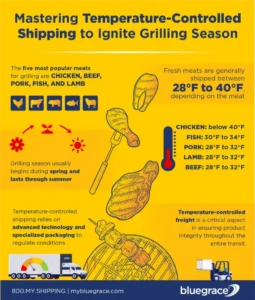
Temperature-controlled shipping solutions are a must. From insulated containers and dry ice packs to refrigerated trucks and cold storage facilities, keeping your product stable and fresh is a non-negotiable requirement every step of the way. Below are just a few of the most popular food choices for grilling and what their optimal temperature is for storing and shipping:
- Beef: 28°F to 32°F (-2°C to 0°C)
- Chicken: Below 40°F (4°C)
- Pork: 28°F to 32°F (-2°C to 0°C)
- Fish: 30°F to 34°F (-1°C to 1°C)
- Lamb: 28°F to 32°F (-2°C to 0°C)
Navigating Seasonal Volatility with a 3PL
Peak seasons can create capacity challenges for temperature-controlled shippers. A logistics partner helps businesses prepare for increased demand by evaluating transportation needs, identifying reliable carrier capacity, and improving shipment visibility.
A managed logistics provider does more than arrange transportation. By analyzing shipment data, carrier performance, and lane requirements, a 3PL helps businesses build a more efficient cold chain strategy while reducing risk during high-volume periods.
Beyond the Thermometer: Technology and Analytics
With a skilled 3PL, you gain deeper insight into your operations through state-of-the-art analytics tools that allow you to manage inventory and forecast future needs. In the world of perishables, forecasting is your best defense against waste. If you can predict the surge in demand weeks before the Memorial Day rush, you can secure reefer capacity before the market tightens and prices climb.
Many 3PLs, like BlueGrace, also lean heavily into the integration of AI to automate the more tedious tasks of logistics management. By automating document verification and real-time tracking updates, your team can focus on higher-level strategy rather than getting bogged down in the minutiae of manual check-calls.
Mitigating Risk in Transit
The greatest threat to a cold chain is the “temperature excursion”, a period where the cargo falls outside of its safe range. This often happens during loading, unloading, or if a reefer unit fails. 3PLs like BlueGrace work with a network of specialized carriers who understand the nuances of food-grade transport. This means ensuring that trailers are pre-cooled before arrival and that drivers are well-versed in monitoring their units throughout the haul.
Partnering with providers specialized in temperature control ensures you are prepared for grilling season and the seasons that follow. With dedicated freight specialists and advanced tools by your side, logistics becomes a manageable part of your operations rather than a constant source of stress.
Choosing a 3PL isn’t about finding a vendor; it’s about finding a partner that understands your product is your reputation, providing the transparency needed to move high-value, perishable goods with confidence. A 3PL analyzes lane density, carrier performance, and historical data to ensure that your supply chain is surviving and thriving the summer rush. So, ignite the grill and savor the flavors of summer, confident that behind every savory bite lies a well-executed logistics strategy that keeps the grilling season on fire
 Login
Login