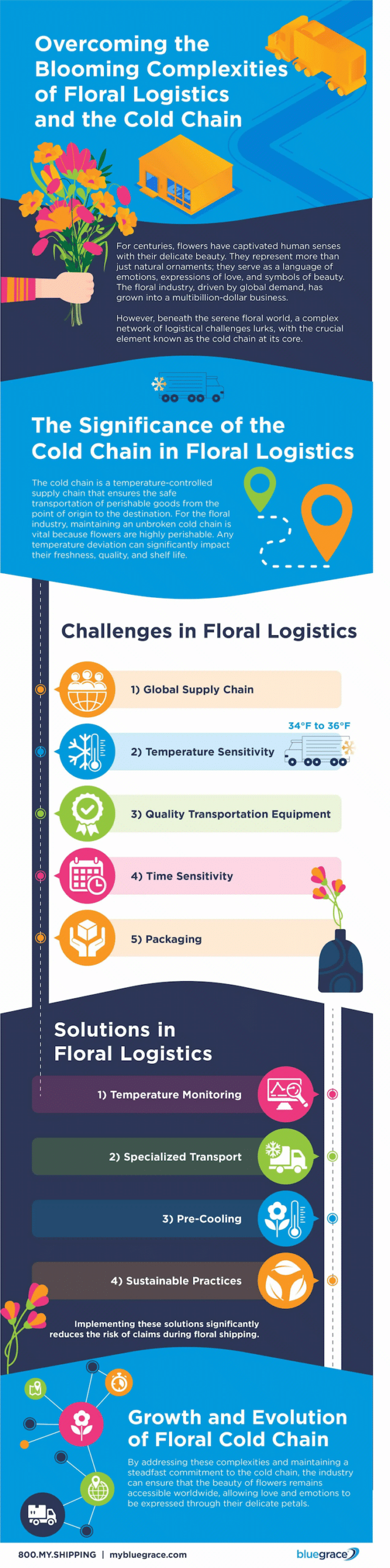
The world of flowers is a beautiful yet delicate place. They bloom everywhere around us and bring beauty to our world, but once snipped, they have a strict time limit. While it is easy to take flowers from a garden and put them directly in a vase, transporting them from a faraway country to a consumer’s home is an entirely different matter. Carriers do not simply place flowers in a truck; they must carefully plan and strategize how those blooms move through the cold chain. The cold chain is a temperature-controlled supply chain that ensures the safe transportation of perishable goods from their point of origin to their final destination. This system is what allows perishables like food, medicine, and flowers to remain fresh and avoid spoilage during long-distance transit.
The Technical Challenges of the Floral Cold Chain
Temperature-controlled technology makes global floral trade possible, but it comes with significant challenges. Carriers must navigate complex logistical hurdles every day; if these are not managed, the entire cold chain can degrade rapidly.
- Global Demand and Deadlines: One of the primary challenges is meeting global supply chain demands. Because millions of people purchase flowers daily, producers must meet high market demand to avoid depleting inventory.
- Source Diversification: To mitigate risk, flowers cannot come from just a few sources. If a single farm faces a disease outbreak or a crop failure, the entire supply is at risk. Thus, flowers are sourced from multiple farms worldwide, including Ecuador, Kenya, the Netherlands, and Colombia.
- Resilience: This diverse network ensures production meets market demands and allows other regions to pick up the slack if one area cannot produce. This diversity is especially vital for meeting the massive surges in demand during holidays like Valentine’s Day or Mother’s Day.
- Asset Integrity: The industry also faces technical challenges regarding temperature sensitivity and the use of high-quality transportation equipment. These tools are essential for maintaining quality throughout the journey. If equipment or materials fail, it can cost suppliers and retailers millions of dollars in lost revenue.
Solutions and Innovations for Floral Logistics
While the challenges are numerous, several methods and tools are available to help logistics professionals manage these complexities.
Advanced Monitoring and Visibility
Technologies like AI and Transportation Management Systems (TMS) have evolved to allow for easier quality checks and real-time monitoring. Modern systems are more secure and resilient, designed to keep products fresh for as long as possible. Specialized equipment, including refrigerated trucks, dedicated staging/inspection locations, and cold storage facilities, helps protect flowers from degrading during critical transfer points. Furthermore, monitors and RFID labels provide shippers with transparency and oversight of a product’s condition throughout its entire journey.
Strategic Pre-Cooling and Handling
Beyond high-tech sensors, specialized handling strategies are essential for improving the floral industry. For example, pre-cooling trailers before loading is a standard practice to ensure flowers are shipped in the best possible environment. This prevents any residual heat in a trailer from causing immediate wilting. Experts also emphasize the importance of maintaining cold temperatures, ideally between 34°F and 36°F, throughout the entire trip.
Sustainability and Ethics
Modern consumers are more mindful than ever of fairtrade practices and sustainability. They want to ensure their items are sourced ethically and that packaging will not harm the environment. This has led to the adoption of recyclable, degradable packaging and the reduction of virgin plastics in favor of post-consumer recycled (PCR) materials. Additionally, choosing seasonal or local blooms, where possible, can help reduce the shipment’s overall carbon footprint.
Navigating the Complexity with a 3PL Partner
Managing the floral cold chain is a highly complex task that changes daily. This is where a 3PL becomes an invaluable asset. A 3PL doesn’t just manage freight; they manage the integrity of the product by:
- Carrier Vetting: Ensuring that every truck in the cold chain is equipped with calibrated reefer units and that drivers follow strict pre-cooling protocols.
- Data-Driven Oversight: Utilizing TMS data to identify high-risk lanes where delays or temperature breaches are more likely to occur.
- Compliance Management: Handling the intricate documentation required for international customs and agricultural inspections to prevent 2-to-3-day delays that could ruin a shipment.
By addressing these complexities and maintaining a steadfast commitment to the cold chain, the industry can ensure that the beauty of flowers remains accessible worldwide. Through the combined efforts of technology, specialized equipment, and strategic 3PL partnerships, the logistics industry continues to allow love and emotions to be expressed through each flower’s delicate petals.
Infographic
 Login
Login